DEPECHE MODE: M CD/DVD & CD/BLU-RAY AND MEMENTO MORI: MEXICO CITY CD & VINYL TO BE RELEASED DECEMBER 5th
"In The End," previously unreleased bonus track from the Memento Mori Sessions, out October 24th
posted: October 22nd, 2025


Following its upcoming limited theatrical engagement, DEPECHE MODE: M, along with a companion full-length concert film and live album, will be released worldwide on December 5th.
The physical release of DEPECHE MODE: M includes 2 DVDs or Blu-rays and 2 CDs chronicling the band's three sold-out concerts at Mexico City's legendary Foro Sol Stadium during their 2023 Memento Mori World Tour.
Disc 1 of the package is DEPECHE MODE: M – a cinematic journey into the heart of Mexican culture's relationship with death, framed by live DM performances from the Mexico City on the Memento Mori tour. Conceived and directed by award-winning Mexican filmmaker Fernando Frías, the film blends concert footage with interpretive interstitials and archival material. DEPECHE MODE: M celebrates the band's global influence while delving into the profound connection between music, mortality, and Mexican tradition.
Disc 2 is MEMENTO MORI: MEXICO CITY a full-length concert film also directed by Fernando Frías and filmed at the Mexico City shows in 2023 where Depeche Mode played for more than 200,000 fans.
Finally, included in each bundle is the 2CD accompanying live album, MEMENTO MORI: MEXICO CITY, featuring over 2 hours of music from these concerts, as well as four previously unreleased bonus tracks from the Memento Mori album sessions.
The live album, MEMENTO MORI: MEXICO CITY, will also be available in standalone 2CD and 4LP vinyl formats.
All formats include four previously unreleased tracks from the Memento Mori Sessions, which were recorded alongside Depeche Mode's 2023 release Memento Mori. The first of these songs, "In The End," will be available digitally on all DSPs on October 24th. The song previously ignited a wave of speculation and excitement across social media and online channels with its debut during the end credits of the world premiere of DEPECHE MODE: M at the Tribeca Film Festival in June 2025.
The tracklist for the MEMENTO MORI: MEXICO CITY film, live CD and vinyl releases is as follows:
All products also include four bonus tracks from the Memento Mori Sessions:
"DEPECHE MODE: M" to be Released In Cinemas and IMAX® Worldwide from October 28
posted: August 13, 2025
Following the premiere at this year's Tribeca Festival, Depeche Mode, along with Trafalgar Releasing and Sony Music Vision, announce the release of the feature film DEPECHE MODE: M, coming to cinemas and IMAX worldwide for a limited theatrical event beginning Tuesday, October 28. The film is expected to screen in 2500+ cinemas in more than 60 countries.
Tickets for DEPECHE MODE: M will go on sale from September 17 at www.DepecheModeM.com where fans can sign up for event alerts.
Conceived and directed by award-winning Mexican filmmaker Fernando Frias, DEPECHE MODE: M is an expressive and dynamic cinematic experience built around footage from DM's three sold-out Mexico City Foro Sol Stadium shows on the 2023-2024 Memento Mori Tour. The feature-length film takes audiences on a musical and spiritual journey, as the songs resonate in real time with fans, illustrating their timeless multi-cultural influence while delving into the profound connection between music, mortality, and Mexican tradition.
Through Frias' creative lens, DEPECHE MODE: M explores the parallels between the themes on Depeche Mode's latest album Memento Mori and the deep connection to death and mortality in Mexican culture. Frias is best known for his award-winning film I'm No Longer Here, which won Mexico's prestigious Ariel Academy Awards with 10 wins, including Best Picture and Best Direction. The film also earned Frias a DGA nomination for Outstanding Directorial Achievement. Additionally, it was Mexico's submission to the Oscars in 2021 and was shortlisted for Best International Feature. His latest film, I Don't Expect Anyone to Believe Me, premiered to critical acclaim.

Depeche Mode 12" vinyl singles collector's edition box set series continues with release of Spirit | The 12" Singles on 20 September 2024
posted: July 31, 2024
Sony Music Entertainment will continue the Depeche Mode 12" vinyl singles project with the release of Spirit | The 12" Singles on 20 September 2024.
Pre-order Spirit | The 12" Singles here: depechemodeboxsets.com
Spirit | The 12" Singles, a collector's edition deluxe box set, contains seven 12" vinyl discs including custom replicas of the original three double 12" singles from Spirit (Depeche Mode's 14th studio album): Where's the Revolution (originally released 3 February 2017, in advance of the album), Going Backwards (released 23 June 2017), and Cover Me (released 6 October 2017).
As a bonus for Depeche Mode fans, Spirit | The 12" Singles premieres a special seventh disc: the first-ever 12" vinyl pressing of the band's legendary Highline Sessions, recorded live in New York City on 3 August 2016. The most complete recording of Depeche Mode's Highline Sessions ever released in any format, this five-song 12" vinyl single includes DM's galvanizing cover of David Bowie's "Heroes" (celebrating the anthem's 2017 40th anniversary) and two previously unreleased performances of songs from Spirit: So Much Love and Poison Heart.
Depeche Mode's Spirit | The 12" Singles comes in a numbered limited edition housed in a deluxe slipcase including seven 12" 180g vinyl discs, riveting artwork recontextualizing original album covers, a replica poster and download card.
Depeche Mode recorded their Spirit album from April through August 2016 at Sound Design in Santa Barbara, California and Jungle City in New York, working for the first time with producer James Ford. Released through Columbia/Mute on 17 March 2017, Spirit was the last Depeche Mode studio album to feature founding member and keyboardist Andy Fletcher before his passing on 26 May 2022.
Sony Music Entertainment released the first two box sets in the Depeche Mode 12" singles series--Speak & Spell | The Singles and A Broken Frame | The Singles--in August 2018 with the second batch--Construction Time Again | The 12" Singles and Some Great Reward | The 12" Singles--arriving in December 2018. SME released Depeche Mode's Black Celebration | The 12" Singles and Music For The Masses | The 12" Singles on 31 May 2019. 2020 saw the release of Violator | The 12" Singles in July and Songs Of Faith And Devotion | The 12" Singles in October. The ninth collection in the series, Ultra | The 12" Singles was released on 27 September 2021 with the tenth volume, Exciter | The 12" Singles, arriving on 10 June 2022. The 11th volume in the series, Playing The Angel | The 12" Singles, was released in November 2022. 2023 saw the release of Sounds Of The Universe | The 12" Singles in August with Delta Machine | The 12" Singles following in September.
Each box set in the series contains the singles from an individual Depeche Mode album pressed on audiophile-quality 12" vinyl. The artwork for the exterior of each of the box sets draws on iconography inspired by the original releases, while the vinyl sleeves themselves feature the original single artwork.
Spirit | The 12" Singles is chronologically the 14th volume in SME's Depeche Mode 12" Singles Series and the first to include a bonus 12" vinyl disc premiering previously unreleased tracks.
# # # # #
Depeche Mode - Spirit | The 12" Singles
Disc One and Disc Two - Where's The Revolution (12BONG 47)
A Where's the Revolution (Autolux Remix)
A Where's the Revolution (Pearson Sound Remix)
B Where's the Revolution (Algiers Click Farm Remix)
B Where's the Revolution (Simian Mobile Disco Remix)
B Where's the Revolution (Pearson Sound Beatless Remix)
C Where's the Revolution (Simian Mobile Disco Dub)
C Where's the Revolution (Terence Fixmer Spatial Mix)
D Where's the Revolution (Patrice Bäumel Remix)
D Where's the Revolution (Ewan Pearson Kompromat Dub)
Disc Three and Disc Four - Going Backwards (12BONG 48)
A Going Backwards (Chris Liebing Mix)
B Going Backwards (Solomun Club Remix)
B Going Backwards (The Belleville Three Deep Bass Dub)
C Going Backwards (Chris Liebing Burn Slow Mix)
C Going Backwards (Point Point Remix)
D You Move (Latroit Remix)
D Poison Heart (Soulsavers Re-Work)
Disc Five and Disc Six - Cover Me (12BONG 49)
A Cover Me (Ellen Allien U.F.O. RMX)
A Cover Me (I Hate Models Cold Lights Remix)
B Cover Me (Nicole Moudaber Remix)
B So Much Love (Kalli Remix)
C Cover Me (Erol Alkan White Light Rework)
C Cover Me (Texas Gentlemen Remix)
D Cover Me (Warpaint Steez Remix)
D Cover Me (Josh T. Pearson Choose Hellth Remix)
Disc Seven - The Highline Sessions (12BONG 50)
A Going Backwards (Highline Sessions Version)
A So Much Love (Highline Sessions Version) - previously unreleased
A Poison Heart (Highline Sessions Version) - previously unreleased
B The Worst Crime (Highline Sessions Version)
B Heroes (Highline Sessions Version)

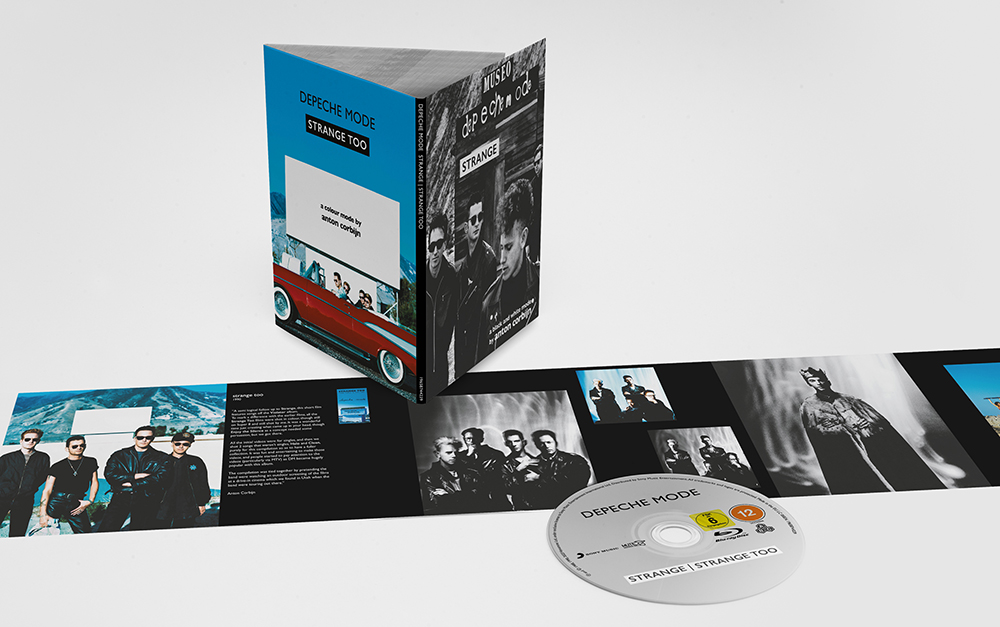
Depeche Mode and Anton Corbijn's Iconic Film Collection Strange & Strange Too to be Released for the First Time Ever on DVD & Blu-Ray by Sony Music Entertainment on Friday, December 8
posted: October 26, 2023
Freshly Restored from Original Super 8 Sources, the Compilation of Groundbreaking Depeche Mode Videos, Directed and Filmed by Anton Corbijn, includes 11 Music Videos + 6 Previously Unreleased Outtake "Vignettes"
Digipack Release includes New Artwork & Liner Notes by Anton Corbijn
Sony Music Entertainment will release Depeche Mode's Strange/Strange Too (a much sought-after collection of music videos directed and filmed in Super 8 by Anton Corbijn) on Friday, December 8. Strange/Strange Too will be released through SME worldwide, excluding USA, Canada and Mexico (where the title will be released through Warner Music Group).
Strange/Strange Too may be pre-ordered HERE
Previously available as individual titles in VHS and Laserdisc formats (now out-of-print and highly collectible), Strange (1988) and Strange Too (1990) are compilations of the provocative and visionary short films lensed by master photographer/director Anton Corbijn, in collaboration with Depeche Mode, to create a new visual iconography for the band and their music.
Available for the first-time in DVD and Blu-ray configurations and as a single collection, Strange/Strange Too presents 11 Anton Corbijn/Depeche Mode music films, newly restored from original Super 8mm sources, alongside six previously unseen outtake "vignettes" from the DM archives. When assembling the final edits for Strange and Strange Too, Corbijn created a visual running order where the individual music videos are perceived as one continuous film, with additional interstitial content not seen in the original clips.
According to Depeche Mode: "Anton Corbijn's photography and art direction have played an indispensable part in the evolution of the Depeche Mode aesthetic. Strange and Strange Too are essential titles in both the Depeche Mode and Anton Corbijn catalogues, and are the perfect example of Anton's unique ability to capture the spirit of DM on film."
The physical nature of Super 8 film means that the stock's rough and grainy quality becomes part of the finished film's inherent aesthetic, and Corbijn's mastery of Super 8 is a key element in Strange/Strange Too and the development of Depeche Mode's visual components. The film restoration underwent a rigorous process over the course of several years with the participation of personnel involved in making the original films including Anton Corbijn. Because this Blu-Ray/DVD release was created from the original Super 8 film stock, the final result may seemingly lack the visual clarity that modern viewers associate with contemporary HD 4k reproduction. In some occasions where the original footage had deteriorated too much, the next best source was used.
First released in 1988 as "Strange – A Black and White Mode by Anton Corbijn,", Strange featured the first five Depeche Mode music clips directed by Anton Corbijn, who shot them mostly in black and white Super 8. Strange included the three main singles from Music for the Masses, the final Black Celebration single ("A Question of Time") and "Pimpf," the instrumental closing Music for the Masses.
Released in 1990, Strange Too (aka "Strange Too – Another Violation by Anton Corbijn") was shot in full-color, opening up a visual/sonic palette for the director and the band as they explored songs from Violator plus bonus videos for "Halo"and "Clean." The Strange/Strange Too DVD and Blu-ray configurations come in a digipack with a 16-page concertina booklet featuring photographs and new liner notes penned by Anton Corbijn.
"To be seen as 'strange' in a creative field is no bad thing as it probably means 'different' which I find is a very positive description of one's struggle to be just that. The idea to make this into a connected series of little films and fake interviews came late into the process of shooting these," wrote Corbijn. "I was shooting all the films myself on black/white Super 8 film. We put all this together on a shoestring budget; those were that kind of days. We have to look at these films in the light of us being young; we were experimenting and I am happy we were given that space at the time by Daniel Miller."
Strange/Strange Too
Track Lists
STRANGE
1. A Question Of Time
2. Strangelove
3. Never Let Me Down Again
4. Behind The Wheel
5. Pimpf
Outtake vignettes:
1. Strangelove
2. Behind The Wheel
3. Behind The Wheel (Shep Pettibone Mix)
STRANGE TOO
1. Personal Jesus
2. Policy Of Truth
3. Enjoy The Silence
4. Clean
5. Halo
6. World in My Eyes
Outtake vignettes:
1. Personal Jesus (Acoustic)
2. Policy Of Truth
3. Policy Of Truth (Trancentral Mix)
Depeche Mode and Hublot Join Together Again For Charity - Supporting The Conservation Collective
posted: March 23, 2023
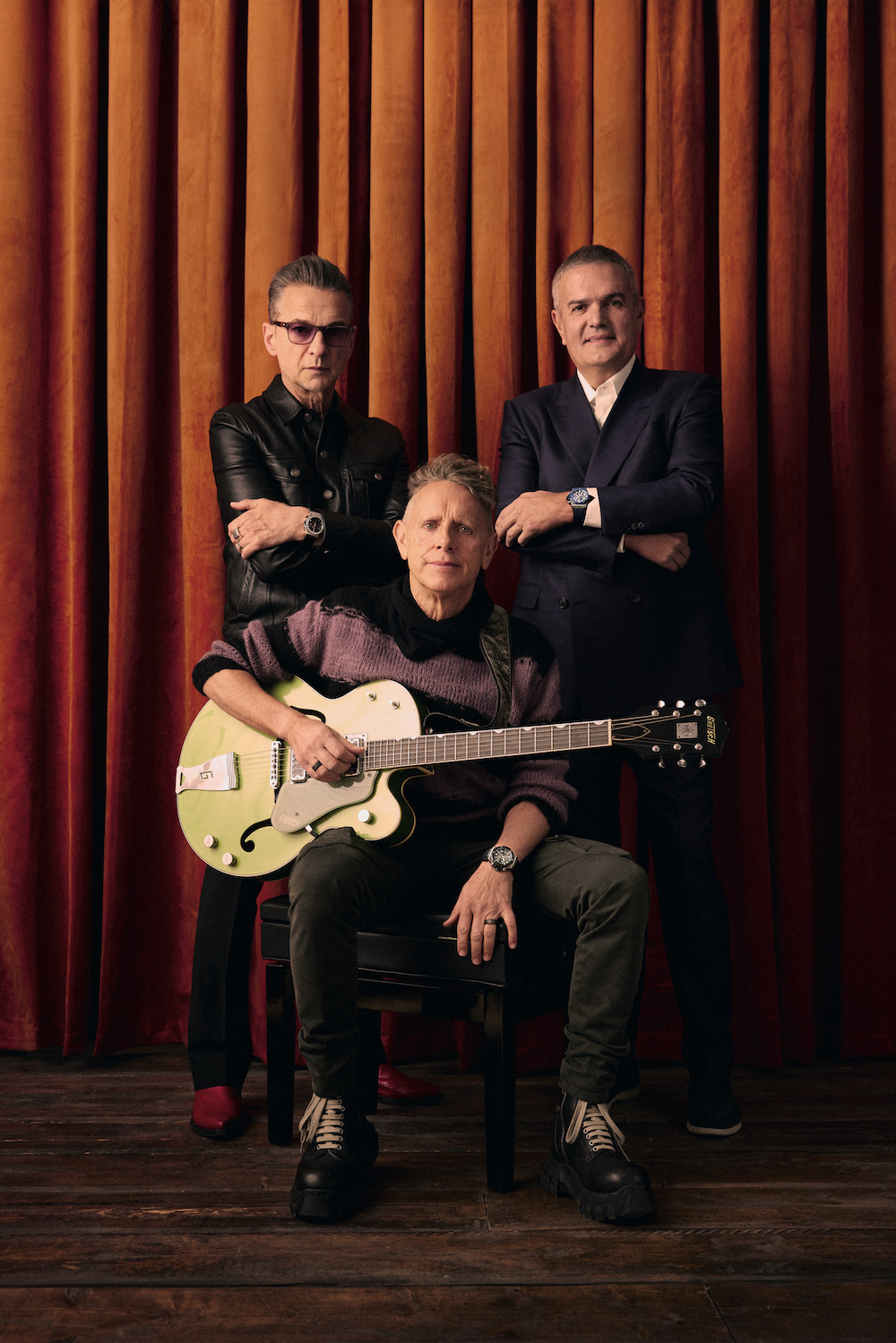
Since the first partnership in 2010, Hublot and Depeche Mode have collaborated a number of times to support causes that both care deeply about. The past partnerships in support of The Teenage Cancer Trust and charity: water raised funds and awareness for childhood cancer research, and brought clean water to developing communities around the world. With this new partnership, the focus becomes the environment - making tangible change toward sustainability, waste reduction, and environmental clean-up.
On the Memento Mori tour, Hublot and Depeche Mode are proud to announce they'll be supporting and raising funds for The Conservation Collective, a UK-based environmental charity. The Conservation Collective are a fast-growing global network of 20 local foundations funding inspiring and effective grassroots initiatives to protect the environment, restore nature, and safeguard against climate change. The Conservation Collective's network of local foundations turbocharge action against plastic pollution by supporting community-driven projects, galvanizing community clean-ups, improving local waste management systems, and encouraging businesses and consumers to reduce overall plastic usage.
In addition, in conjunction with Live Nation's Green Nation team, Depeche Mode and Hublot will also support programs on tour and at the venues focusing on limiting use of single-use plastics, improved recycling, food and other waste reduction, and other sustainability-related initiatives.
We're just getting started, but we're excited to provide further updates on what we're able to achieve together with Hublot and The Conservation Collective on tour and around the world.
For more information, or to get involved with The Conservation Collective, please visit https://conservation-collective.org/.
For more information on Hublot and Depeche Mode's past and current collaborations, please visit https://www.hublot.com/en-us/partnerships/depeche-mode.

Join us for a special announcement. Tuesday at 1pm CET.
posted: October 3, 2022
Here is an archived YouTube version of our Facebook Live Special Event
To see a full list of previous dates of the Memento Mori Tour, including set lists, please visit The Archives.